
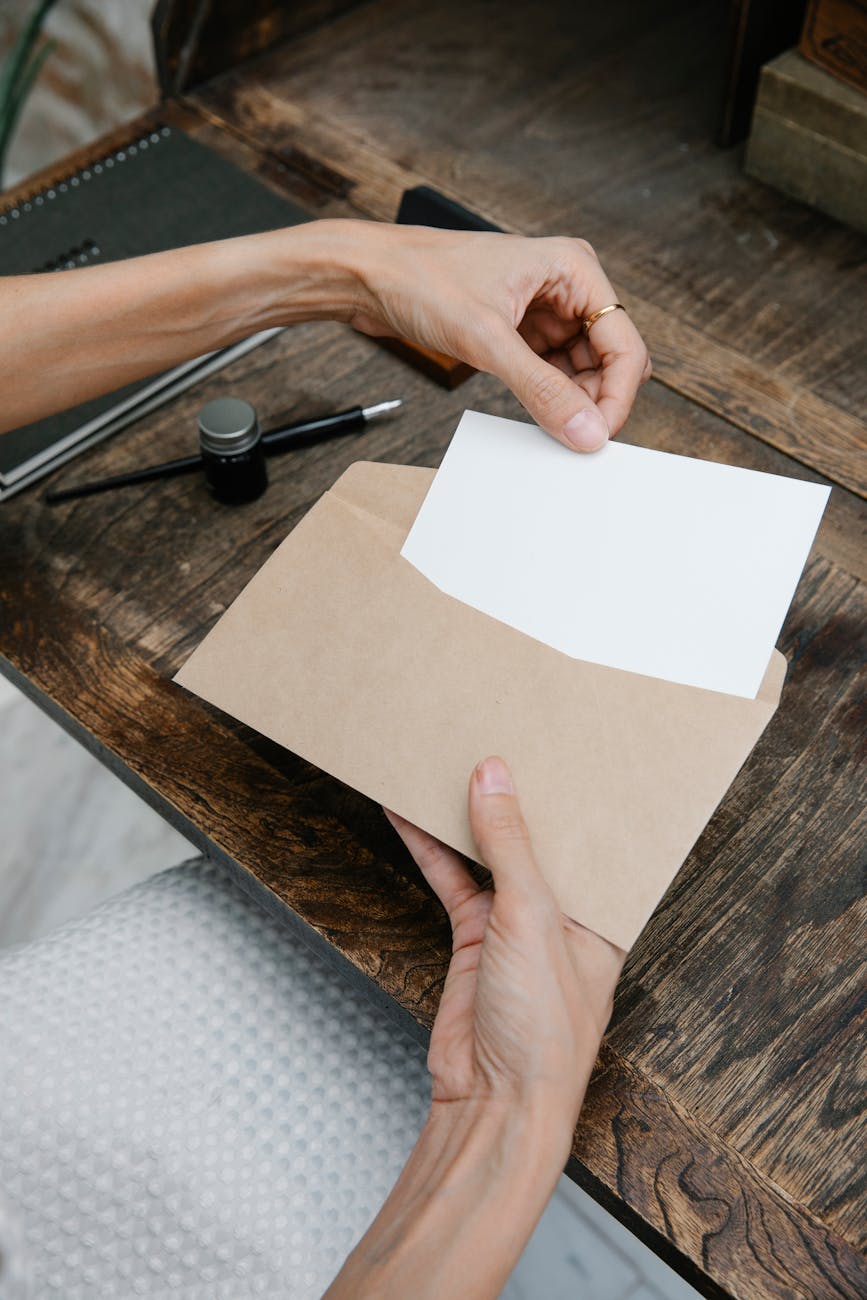
I wrote the letter on a night when sleep refused to come.
The room was silent except for the ticking of the clock, each second louder than the last. Outside, rain tapped against the window in an irregular rhythm, as if Morse code from a universe trying to tell me something I wasn’t ready to hear. I sat at my desk, pen hovering over the paper, my heart heavier than my hand. I knew exactly what I wanted to say. I always had.
I’m sorry. I tried. I loved you more than I knew how to say.
The words flowed easily, as if they had been waiting for years to be released. I wrote about the conversations we never finished, the misunderstandings we never cleared, and the silence that grew between us like an uninvited guest. I wrote about that Tuesday afternoon when you said my name twice, and I pretended not to hear because I was afraid of what you might ask. I wrote about the birthday card I bought, but never signed it. I wrote about the phone call I rehearsed a hundred times but never made.
The ink bled slightly where a tear fell. I didn’t wipe it away.
I folded the letter carefully and slipped it into an envelope. I even wrote the name on it, my handwriting surprisingly steady despite the trembling in my chest. The envelope sat on my desk for three days, catching the morning light, gathering dust in the afternoon, watching me with its blank white stare.
But I never sent it.
Days turned into weeks. The letter stayed hidden in a drawer, beneath old notebooks and unfinished drafts—a graveyard of intentions. Every time I opened that drawer searching for a pen or a receipt, it stared back at me, quiet, patient, accusing.
Life moved on, as it always does. I laughed at parties. I answered emails. I bought groceries and remembered to water the plants. Smiles returned. Laughter sounded normal again. To anyone watching, I had recovered beautifully.
But something inside me remained unresolved, like a sentence without a full stop, like a song ending on a dissonant chord.
Three months after writing the letter, I ran into your sister at a coffee shop. My heart stopped. She looked tired, older somehow, though it had only been a season since I’d last seen her. We exchanged the usual pleasantries, dancing around the obvious absence in our conversation. Then, just as she was leaving, she turned back.
“They ask about you sometimes, you know,” she said softly. “Wonder how you are.”
I wanted to ask her to pass along a message. I wanted to tell her about the letter. Instead, I just nodded and said, “Tell them I’m doing well.”
She smiled sadly, as if she could see right through me, and walked away.
That night, I took the letter out again. I held it up to the light, as if I could read the words through the envelope without breaking the seal. The urge to send it was overwhelming. I even looked up the address, my finger hovering over the search bar on my phone.
But something stopped me. Fear? Pride? Or maybe the quiet understanding that some bridges, once burned, leave ashes too delicate to walk across.
I put the letter back in the drawer.
Six months passed. Then nine. The letter became part of the drawer’s landscape, as permanent and forgettable as the extra batteries and the broken watch I kept meaning to fix.
Then came the phone call.
It was a Tuesday—of course it was a Tuesday. Your mother’s voice was calm, too calm, the kind of calm that comes when all the crying has already been done.
“There was an accident,” she said. “They’re stable now, but it was close. Very close.”
The world tilted. I sat down heavily on the edge of my bed, the phone pressed so hard against my ear it hurt.
“They’ve been asking for people,” she continued. “Making amends, I think. Saying things they never said before. It’s like they finally realised how fragile everything is.”
She paused, and in that pause, I heard everything she wasn’t saying.
“I thought you should know,” she finished quietly. “In case there’s anything you wanted to say.”
After we hung up, I stood in the middle of my apartment for what felt like hours. The letter was in my hand before I consciously decided to retrieve it. This was it. This was the moment I’d been waiting for, the cosmic permission to finally send what I’d written.
I sat at my desk and carefully opened the envelope for the first time since sealing it.
As I reread the letter, something strange happened.
The words that had felt so urgent, so necessary nine months ago, now seemed to belong to a different person. The anger I thought I felt wasn’t there anymore. The sadness felt softer, like an old photograph fading at the edges. And the apologies—I realised with a jolt—weren’t entirely honest.
Because buried beneath the “I’m sorry” and “I tried” was a deeper truth I hadn’t been ready to face: I was angry. Angry at being left, at being misunderstood, at caring so much when it seemed like you had found it so easy to walk away. The letter wasn’t about reconciliation. It was about wanting you to hurt the way I had hurt.
I set the letter down and wrote a new one. This one was shorter, rawer, more honest:
I heard about the accident. I’m glad you’re okay. I’ve spent nine months carrying around words I thought I needed to say to you, but I realise now they were never really meant for you at all. They were meant for me. I needed to forgive myself for staying silent, for waiting too long, for believing that unspoken words didn’t matter. But here’s what I’ve learned: some words matter deeply, and some relationships end not because of what we said or didn’t say, but because they were always meant to be temporary teachers, not permanent homes. Thank you for what you taught me, even if the lessons hurt. I hope you find peace. I think I’m finally finding mine.
I folded this letter and put it in an envelope. But I didn’t write your name on it.
I wrote mine.
Months later, while cleaning my desk, I found both envelopes. The first letter, yellowed now and creased from being handled so many times. The second, still crisp and white, never opened.
I opened the one addressed to me and read the words I’d written on that Tuesday night after the phone call. And this time, something shifted into place. The anger had dissolved. The sadness had transformed into something quieter, wiser. And the words—I realised—had done exactly what they needed to do.
They had freed me.
I tore both letters into small pieces and let them fall into the bin like snow, like ash, like the past finally settling where it belonged.
That night, I slept peacefully.
Because some letters are never meant to be sent—they are meant to be understood. And some goodbyes don’t need words at all. They just need time, and distance, and the courage to let go.
Three years later, I saw you at a bookstore. You were in the poetry section, and you looked different—lighter somehow, like you’d also learned to set down heavy things. Our eyes met across the aisle. You smiled, a small, genuine smile that held no questions, no expectations.
I smiled back.
We didn’t speak. We didn’t need to.
Some conversations happen in the spaces between words, in the letters we write and never send, in the silence that teaches us when to hold on and when to finally, gratefully, let go.
Years of Paper
I wrote you letters made of rain and rage,
of all the words my mouth refused to say,
each envelope a tiny, paper cage
for feelings that had nowhere else to stay.
I sealed them tight with wax and fear and pride,
addressed them to the person you once were,
but couldn’t bear to send what lived inside—
The truth that loving you still made me stir.
Now drawer-kept secrets yellow with the years,
their urgency dissolving into dust.
What once demanded poetry and tears
becomes, at last, a quiet, earned trust.
Some letters teach us not by being read,
but by existing, unsent, in our heads.



 Lamiya Siraj: Stories & Beyond
“Your thoughts matter – Share them below!”